
There is a specific kind of magic that happens when you stop being a tourist and start becoming a witness to a land’s soul. My journey through Ghana wasn’t just a series of stops; it was a rhythmic transition from the salt-sprayed history of the Atlantic to the mist-covered peaks of the Volta Region.
The Pulse of the Ga
My residency began in Accra, based in the tranquil, leafy streets of East Legon. Accra has a way of being “chilled” despite its status as a bustling capital.
The Landmarks of Liberty
I felt the weight of the continent’s pride standing in the vastness of Independence Square, but the city’s true depth revealed itself in the quieter corners. At the W.E.B. Du Bois Museum, I found myself immersed in an intellectual history so rich it felt like the walls were whispering.
Echoes of the Forts
However, Ghana’s story is one of profound contrast. Walking through Ussher Fort and the fishing village of Elmina, I stood where history once took a dark turn. These ports, silent now but for the crashing waves, are essential altars of reflection.
The Rhythm of the Culture
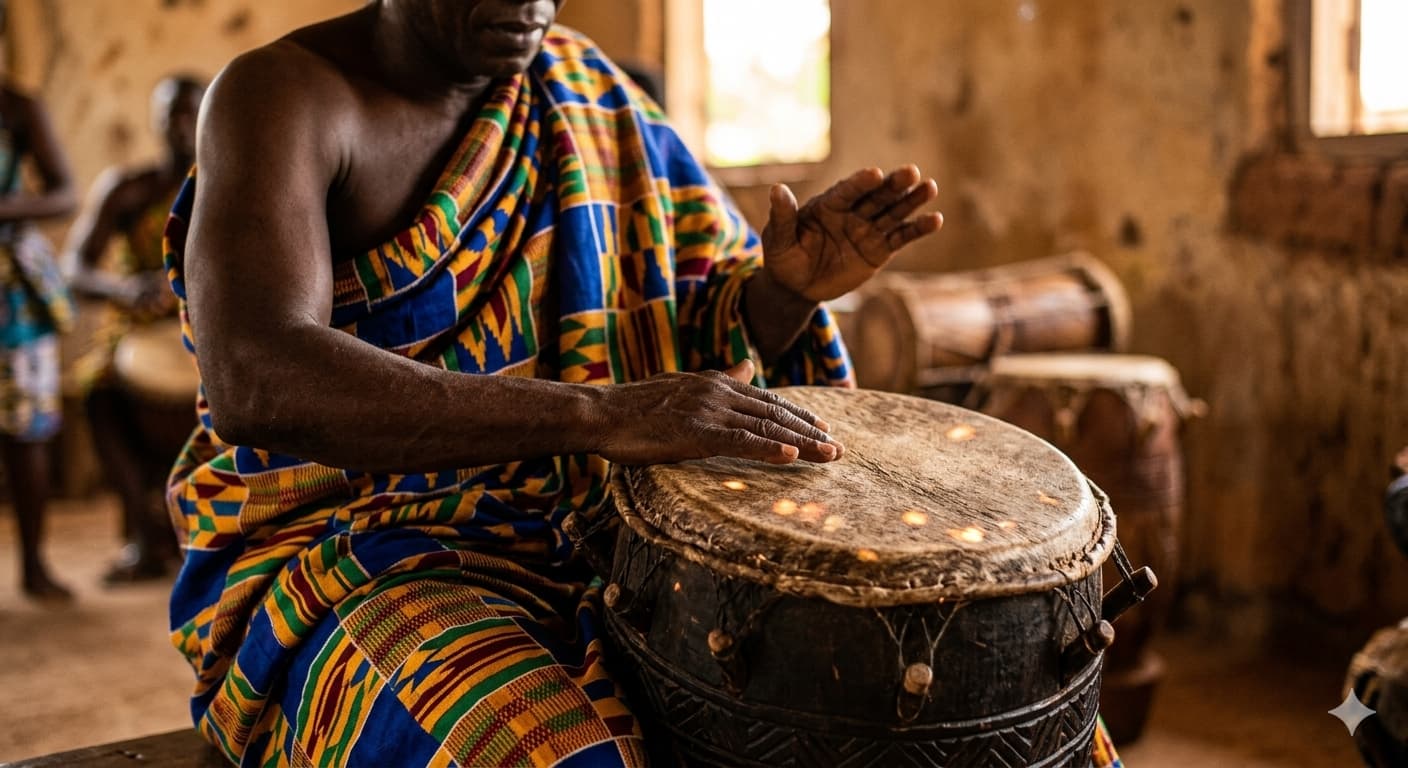
To heal from the weight of the past, I sought the vibrant present. At the Accra Cultural Centre, the air was thick with the scent of woodsmoke and the bright colors of Kente fabric. I didn’t just shop; I sat with the artists, my hands finding the rhythm on traditional drums, briefly becoming part of the music that defines the Ga people. Every day ended with the comfort of Jollof rice and the smoky, addictive heat of Shito sauce—the true flavor of home.
Into the Ewe Highlands
Leaving the coast, the landscape began to fold and rise. Four hours away lies the Volta Region, the ancestral home of the Ewe people. The transition is marked by the engineering majesty of the Akosombo Dam, a gateway into a greener, more vertical world.
Reaching the Summit: Mt. Afadjato
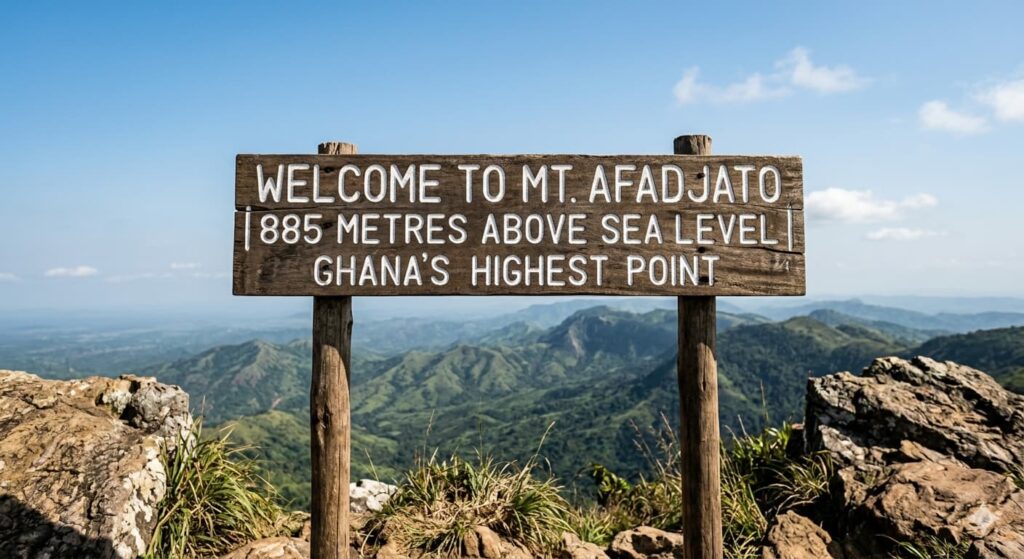
The air grew cooler as I prepared to meet Mt. Afadjato. At 885 metres above sea level, she is the highest point in the country. The two-hour hike was a moderate, steady climb—a physical meditation that rewarded me with a view of Ghana that felt infinite.
Sanctuary and Source
The expedition continued to the Tafi Atome Sanctuary, where the sacred mona monkeys bridge the gap between nature and village life. To descend from the peak is to be embraced by the forest, eventually reaching the Wli Waterfalls. Walking an hour through the lush canopy to reach the source felt like a pilgrimage. Standing in the spray of water believed to originate from the very heart of the land, I felt entirely recharged. While in this region, nothing compared to the heavy, satisfying luxury of pounded yam with goat meat stew.
The Ageless Connection
From the drum circles of the Ga to the mountain peaks of the Ewe, Ghana is a tapestry of resilience and rhythm. It is a place where you can hike until your lungs burn, reflect until your heart is full, and eat until your soul is satisfied. It wasn’t just a tour; it was an expedition into what it means to be truly alive.