
My 2025 residency in Cape Town began in the vibrant heart of Green Point. From my balcony, the iconic DHL Stadium stood as a modern monument, a silver crown against the sky. Below it lay the lush Green Point Urban Park, the city’s “green lung.”
Every morning, I would cross the park, joining the steady stream of locals exercising amidst the curated fynbos and water features. There is a specific, quiet energy there—a communal pulse of people moving, breathing, and starting their day in the shadow of the mountains. It was the perfect sanctuary to return to after a day of exploring the wilder edges of the Cape.
The Golden Valleys: A Sensory Prelude
The expedition truly began as I moved inland into the rolling, emerald valleys of the Cape Winelands. Traveling through Stellenbosch, Franschhoek, and Paarl, I was struck by the architectural elegance of the Cape Dutch buildings—their white-washed walls and ornate gables standing in stark, beautiful contrast against the rugged green mountains.
The wine tasting was an odyssey for the senses. In the cool, quiet depths of the cellars, I explored a vast array of vintages, uniquely paired with artisanal chocolates that brought out the hidden notes of the grapes. Walking through the sun-drenched farms, I felt the immense scale of the region’s heritage. The tour reached its emotional peak in Paarl at Groot Drakenstein. Standing at the site of Nelson Mandela’s final walk to freedom was a profound moment of reflection—a witness to the enduring human spirit that defines this land.
Echoes of History and the Atlantic Pulse
Returning to the coast, I transitioned from the vineyards to the salt-sprayed history of Robben Island. The ferry ride across the bay is a silent, heavy passage. Standing within the narrow walls that once held the country’s most resilient leaders is a transformative experience; it’s a place where the air feels thick with the weight of the past.
To process that history, I sought the vibrant, healing energy of the V&A Waterfront. Between the barking seals sunning themselves on the wooden docks and the rhythmic pulse of local artists playing traditional instruments, the waterfront is the city’s living heart. It is a place of indulgence—fine meals shared as the Atlantic breeze carries the music of the buskers through the air, reminding you that life here always finds its way back to joy.
The Vertical Frontier: Table Mountain and the Peninsula
The geography of Cape Town is defined by its verticality. Ascending Table Mountain, I watched the city and the stadium shrink below me. At the summit, the world changed instantly; it was misty and chilly, with the unique fynbos flora glistening in the damp air. The views from the peak are infinite, a reminder of the continent’s raw, ancient power.
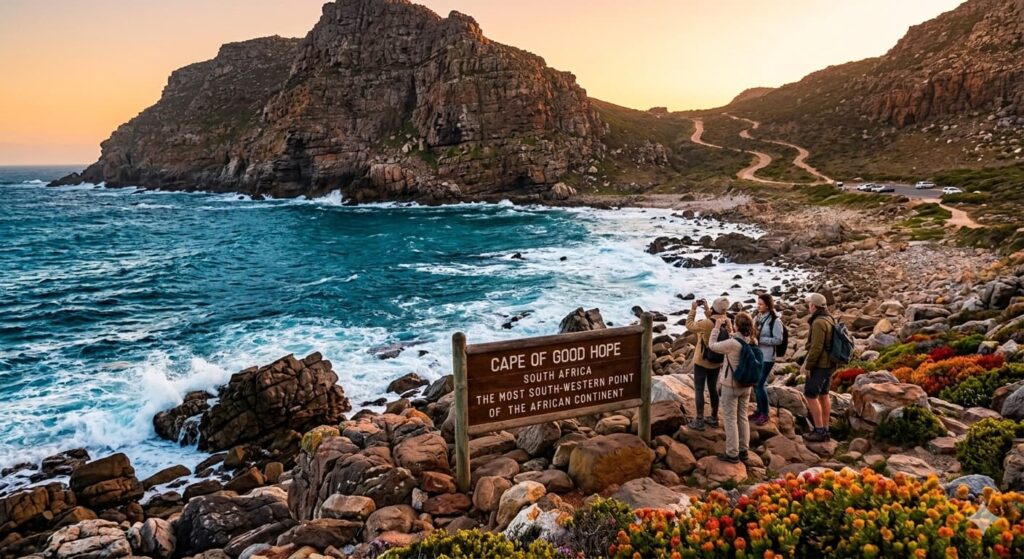
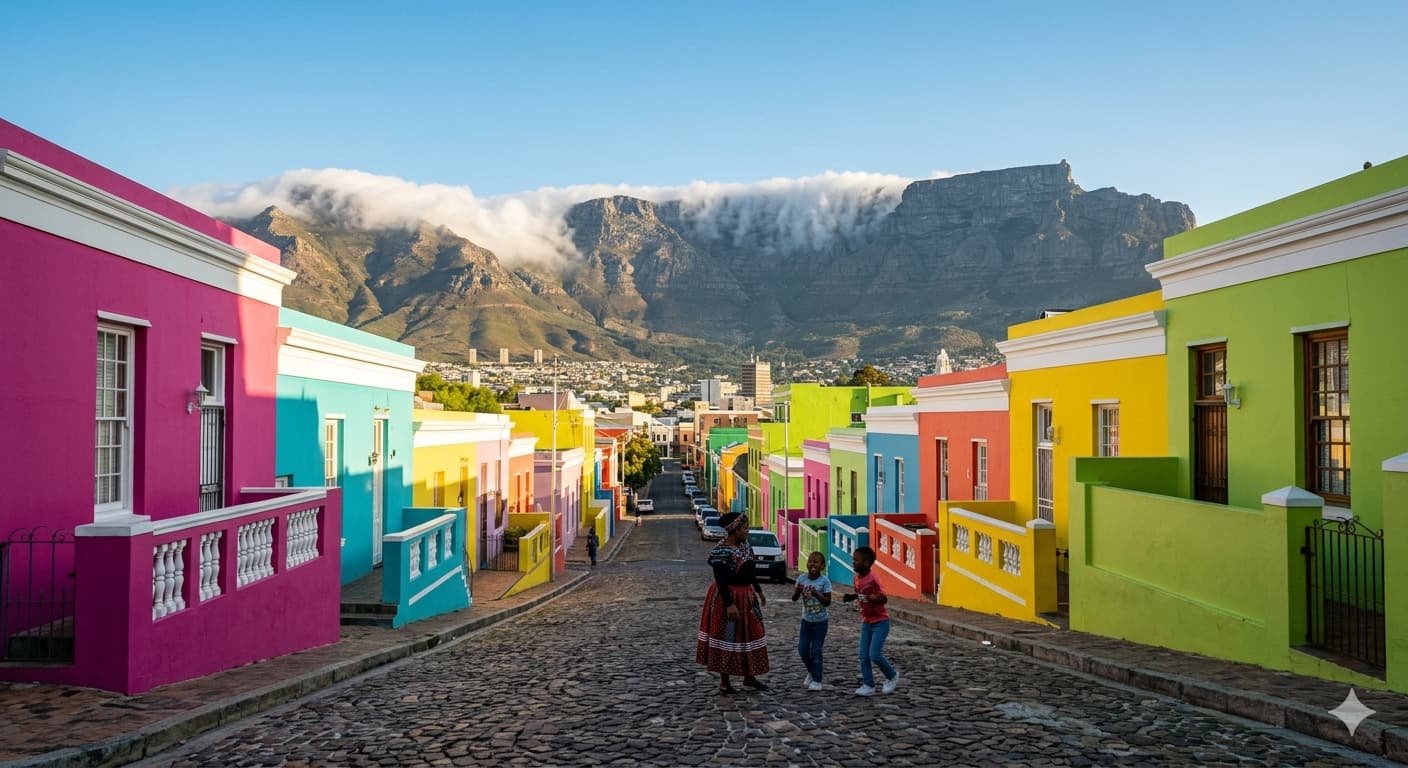
The journey then traced the coast south through Table Mountain National Park. At Boulders Beach, I found myself among the African penguins, their playful energy a delight against the turquoise water. Further down, the Cape of Good Hope offered the exhilarating sense of standing at the edge of the world. On the return journey, I explored the historic neighborhood of Bo-Kaap. Walking past the legendary row of bright, multi-hued houses—vivid pinks, greens, and yellows—felt like walking through a living gallery of Cape Malay culture and resilience.
The Rhythm of the Cape Sun
My final stops brought me to the popular fishing town of Hout Bay. Sitting by the harbor, I had an incredible ostrich burger, a true local delicacy that captured the “wild” side of South African cuisine.
Because it was early in the year, the Cape rewarded me with endless time. The sun refused to set until almost 8:00 p.m., turning the sky into a long, golden celebration that stretched over the stadium and the park I called home. It wasn’t just a visit; it was a deep immersion into a city that is as beautiful as it is brave.